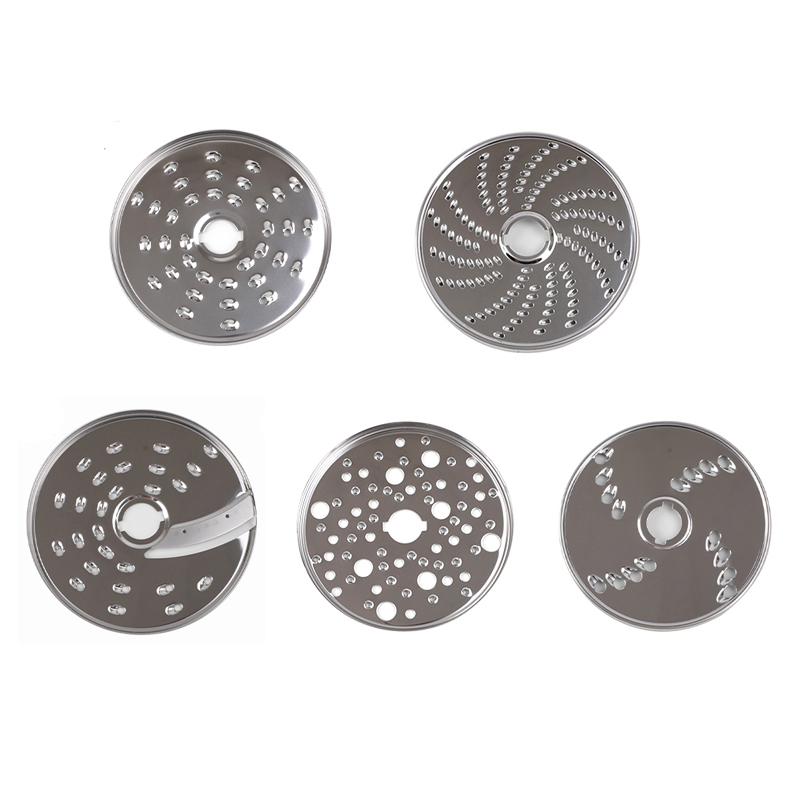
A food processor disc is a functional cutting component, not simply a round metal plate. The opening pattern, raised edge, mounting interface and material all influence how the appliance performs. For an OEM buyer, the useful starting point is the food preparation result: thin slices, coarse shreds, fine gratings, julienne strips or another defined cut.
This guide compares the main disc functions and explains what should be confirmed before requesting a quotation for stainless steel food processor discs or a broader food processor parts program.
Slicing: A Continuous Cutting Edge
A slicing disc normally uses a raised, continuous cutting edge beside an opening. As the disc rotates, the food is guided across that edge and the thickness is determined by the approved geometry, product path and appliance interface. A fine slicing design and a coarse slicing design may look similar in a photograph while producing different results, so the drawing or sample matters.
Fine, Coarse and Waved Slicing
Fine slicing is used when a thinner cut is required. Coarse slicing creates a thicker slice, while waved slicing introduces a shaped edge for a different presentation. These functions should be described in the project brief rather than inferred from a generic disc name. The mounting hole, hub and clearance around the cutting area should be reviewed together with the desired result.
Shredding: Repeated Raised Edges
A shredding disc uses a group of raised openings to create narrow strips. Fine shredding and coarse shredding are differentiated by the opening geometry and spacing. Vegetable shredding and cheese shredding may require different practical patterns even when both are described as shredding, because the food texture and feed behavior are different.
Fine and Coarse Shredding Patterns
Fine shredding generally uses smaller or more closely arranged cutting openings. Coarse shredding uses a more open pattern. The supplier should review the actual pattern, edge direction and disc thickness from the approved reference. A product photo alone is not enough to define a replacement disc.
Grating and Julienne Functions
Grating uses perforations or raised teeth to reduce food into smaller pieces. Fine grating and coarse grating are selected according to the target texture; cheese grating is one common application. Julienne cutting produces narrow strips and requires a pattern that controls both strip width and the relationship between openings.
French fry cutting and dicing are related but distinct functions. A French fry pattern creates repeated rectangular strips, while dicing may require a specific cutting arrangement and appliance path. These functions should be confirmed against the customer’s sample, product requirement and mounting interface.
Why Stainless Steel Material Selection Matters
Food processor discs need a material and finish suitable for the intended appliance program. Shengyue’s existing disc page references 420/430 stainless steel for selected disc programs; the final material remains a project decision based on the approved drawing, sample and application requirements. Edge formation, surface condition and handling safety should be reviewed together rather than treating material grade as an isolated specification.
What OEM Buyers Should Define
A useful RFQ identifies the required function, target cut, disc diameter, center interface, mounting holes, thickness, material, surface finish and any reference appliance. If a replacement disc is being developed, send the original component or a clear sample wherever possible. This allows engineering to distinguish slicing, shredding, grating, julienne, French fry and dicing requirements without guessing.
Drawing-Based Manufacturing
For an OEM project, the manufacturing route follows the approved design. Shengyue can review tooling, stamping, cutting pattern forming, edge processing and inspection requirements before quotation. The goal is a repeatable component that fits the appliance interface and delivers the intended food preparation function.
Summary
Slicing uses a continuous edge, shredding uses repeated raised openings, grating uses perforations or teeth, and julienne, French fry and dicing require their own defined patterns. Choosing the correct food processor disc begins with the function and ends with an approved drawing or sample.
How Buyers Can Compare Samples
When comparing a current disc with a proposed replacement, examine more than the number of openings. Check the outside diameter, center interface, locating holes, direction of the raised edge, disc flatness and the relationship between the cutting area and the feed path. These details help the manufacturer understand the appliance rather than simply copying a visual pattern.
It is also useful to describe the expected food result in plain terms. A buyer may need a thin vegetable slice, a thicker potato slice, a fine carrot shred, a coarse cheese grate or a narrow julienne strip. A short application description gives engineering context to the drawing and helps avoid confusing similar-looking patterns.
Function, Interface and Safety Review
The cutting function and the mechanical interface must be reviewed together. A disc with the correct pattern but the wrong center opening will not work in the appliance. Likewise, a mounting feature that is positioned too close to a raised edge may affect assembly or handling. For that reason, OEM review normally combines the product sample, appliance interface and intended use.
Questions to Ask Before Selecting a Pattern
Ask whether the appliance needs a disc for a single function or a set of interchangeable tools. Confirm how the user loads food, how the disc is retained and whether the cutting edge is exposed during cleaning. These practical questions affect the opening layout, mounting interface and handling review.
It is also useful to explain the difference between the required food result and the commercial name used for a part. A “vegetable disc” may mean slicing, shredding, grating or julienne depending on the market. The drawing, sample and application description should define the function clearly so the OEM supplier can develop the correct component.
Keeping the Specification Practical
A practical specification separates confirmed facts from preferences. Confirmed facts may include the existing interface, the desired cut and the sample dimensions. Preferences may include a surface appearance or a proposed material that still needs engineering review. This makes quotation discussions clearer and avoids treating a keyword or generic product label as a final manufacturing requirement.